
Chasing the Aurora Northern Lights on an Arctic Train Journey
A realistic look at chasing the Northern Lights on an Arctic train journey in Northern Norway, including how it works, when to go, and what travelers should expect from the aurora.
NORTHERN LIGHTS TRAIN NORWAYAURORA BOREALIS ARCTIC NORWAYARCTIC RAIL JOURNEY NORWAY
Wyta
12/13/20253 min read
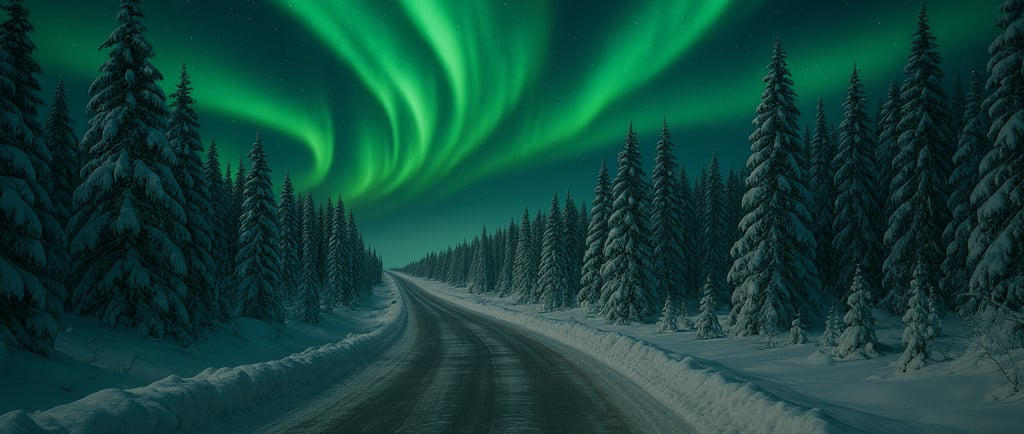
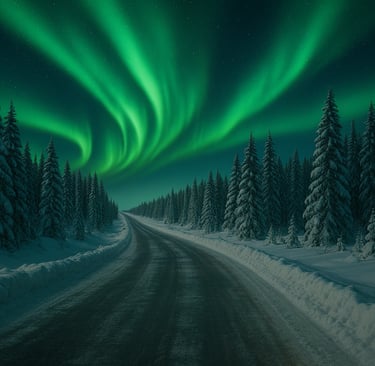
Chasing the Aurora and Northern Lights by Train in Arctic Norway
Chasing the aurora and Northern Lights is not about luck alone. It is about understanding geography, light conditions, and how movement through the Arctic landscape can dramatically affect what you see. In Arctic Norway, one of the most effective and understated ways to experience the Northern Lights is by train, traveling inland through regions where darkness dominates and artificial light disappears.
This Arctic train journey is not a gimmick or a sightseeing ride designed for spectacle. It uses an existing northern rail corridor to reach terrain that naturally offers better aurora viewing conditions during winter.
Why Arctic Norway is ideal for aurora and Northern Lights viewing
Arctic Norway sits directly beneath the auroral oval, the zone where aurora borealis activity is most frequent. During winter, this region experiences long stretches of darkness, sometimes lasting most of the day. These prolonged night hours are essential for consistent Northern Lights visibility.
Equally important is the lack of light pollution. Outside of towns, much of Arctic Norway remains unlit, especially inland. Coastal areas often struggle with cloud cover due to moisture from the sea, while inland mountainous regions frequently provide clearer skies. These factors combined make Arctic Norway one of the most reliable places in Europe to see the aurora when conditions align.
How the Arctic train journey improves viewing conditions
The Northern Lights train experience typically departs from northern hubs such as Narvik and travels inland along a rail line that climbs into remote Arctic terrain. As the train moves away from populated areas, artificial light fades rapidly and the sky opens.
Unlike road based aurora tours that rely on constant repositioning, the train allows travelers to move steadily through darker zones without interruption. This creates a more stable environment for observing the aurora, especially during nights when activity develops slowly rather than appearing suddenly.
Rail travel also eliminates the need for winter driving on icy mountain roads, making it a safer and more comfortable way to reach optimal viewing areas.
What the experience is actually like
An Arctic train journey during Northern Lights season unfolds quietly. Inside the train, lighting is kept low to preserve night vision. Outside, the landscape transitions from coastal terrain to wide valleys and mountain passes.
Some nights produce no visible aurora. Other nights begin with faint green arcs that fade and return before strengthening. When activity increases, the aurora often moves slowly across the sky, forming bands and curtains rather than dramatic flashes. This gradual buildup is typical of real aurora displays and rewards patience.
The experience is observational rather than performative. There are no guarantees and no scripts, only conditions.
Best time of year to plan an aurora train journey
Northern Lights season in Arctic Norway generally runs from late September through March. During this period, darkness is sufficient for aurora viewing, though outcomes depend heavily on cloud cover and solar activity.
Travelers who plan multiple nights in the region consistently have better results than those attempting a single night. Clear skies matter more than strong aurora forecasts, and inland locations often outperform coastal ones.
How this compares to other Northern Lights tours
Most Northern Lights tours rely on minibuses or vans that chase clear skies by road. While effective at times, these tours can involve long hours, crowded stops, and frequent movement.
The Arctic train approach is different. It focuses on positioning rather than chasing. The journey itself becomes part of the strategy, moving travelers into deeper darkness and allowing the sky to change naturally.
This makes the experience especially appealing to photographers, solo travelers, and anyone who prefers a quieter, more immersive encounter with the Arctic night.
Setting realistic expectations
The train does not create the aurora. It removes obstacles.
Understanding this distinction is essential. The Northern Lights remain unpredictable, and no method guarantees a sighting. What the Arctic train offers is access to better conditions, not control over the outcome.
Final perspective
Chasing the aurora and Northern Lights by train in Arctic Norway is about patience, positioning, and respect for the environment. When the lights appear, they feel authentic because nothing was staged.
That is the difference between watching the aurora and truly experiencing it.
Plan it the right way
Experiences like this depend heavily on timing, regional knowledge, and itinerary design. Choosing the wrong dates, base location, or trip length can mean missing the conditions entirely.
If Arctic Norway and the Northern Lights are on your list, working with a travel expert who understands the region makes a measurable difference.
Who’s your travel agent?
Book your next extraordinary escape with Wyta.
Travel that matters.
Explore
Curated luxury travel experiences around the globe.
Journey
Adventure
+1 646 980-4904
© 2026. All rights reserved.